*presenting a rambly wannabe meta that i hope makes some sense but i. am sleepy*
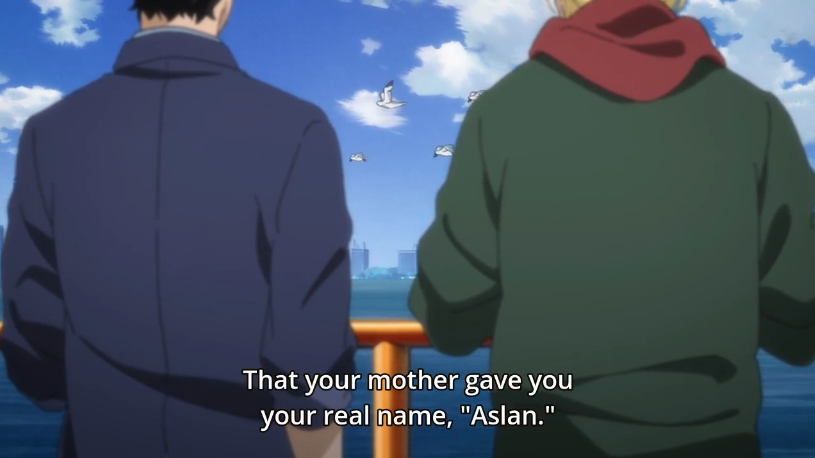
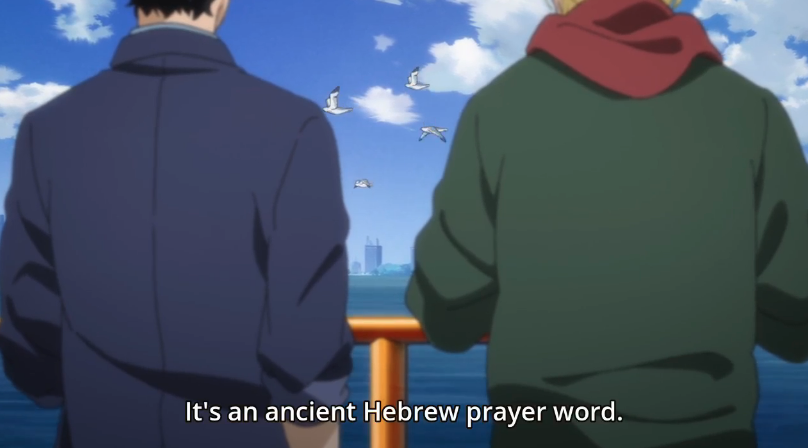
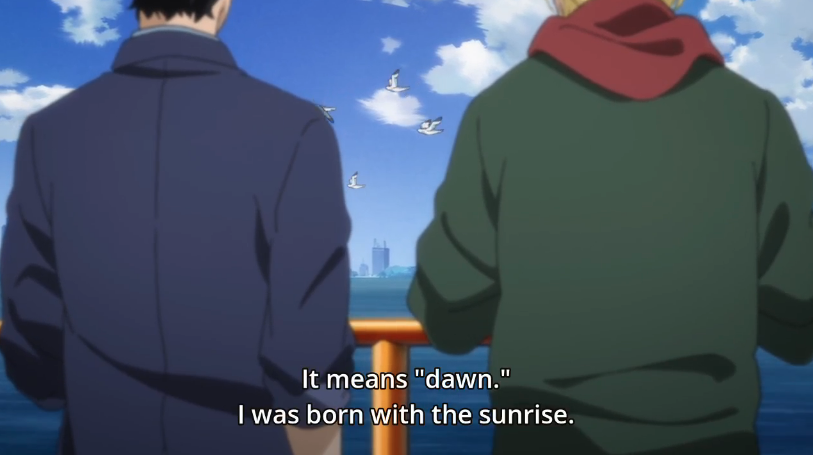
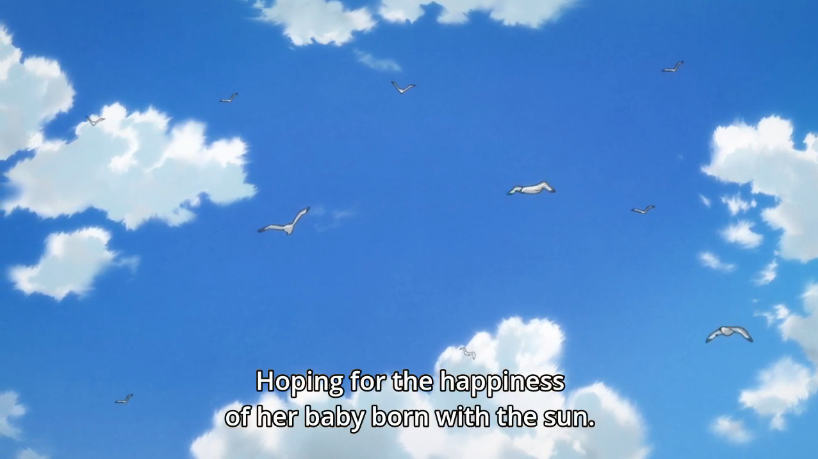
One of the saddest conversations in Banana Fish, for me, was this one.
Eiji is completely pure-intentioned and trying to comfort Ash here, and he might genuinely believe it, but Ash expresses doubt and the viewer also probably doubts it. Even if she did wish for the best for her son, which is certainly possible, it still doesn’t erase that she left him, ultimately deeming him less valuable to her than her free city life.
But I want to talk more about the implications of Ash’s name and the symbolism associated with “Aslan” in particular–which makes the name seem more like a curse than a gift, a double-edged sword in many ways just like Ash’s other innate talents (intelligence, leadership skills, good looks). (“Jade” has its own implications–it’s a commodity, for one thing, and Dino literally gives him a $400,000 piece of jade to execute him in, and his foil Yut-Lung is associated with wearing amethysts with the same implications, but that’s for another time.) Aslan as a name, in particular, is associated with religious symbolism. There’s repeated heaven/hell imagery in Banana Fish, always associated with Ash and/or Dino, and almost always contributing to other characters dehumanizing Ash.
Yut-Lung is often displayed with peacocks and even has a painting of one in his sitting room. The general significance of the peacock could be divinity, power and beauty, as it was back in the Ming Dynasty but it could also have a double meaning seeing as Ash is called a peacock by Dino.
The peacock’s is tail is associated with the goddess Guan Yin, for its “100 eyes” and symbolises protection and holiness which Ash also has metaphorical ties to. Holiness being how Shorter says that Ash was like an angel, and compares him as such to the one he was sent by Nadia. Protection could be his protectiveness of Eiji and the street kids.
Angel Eyes is actually Shorter pining for Ash, calling him an angel and then admitting to masturbating to a picture of an angel that resembles Ash while pleading that he’s straight, in this essay I will






 Moonlit Spires